What to Eat at China's Night Markets: A First-Timer's Guide
Your First Night Market: What to Expect
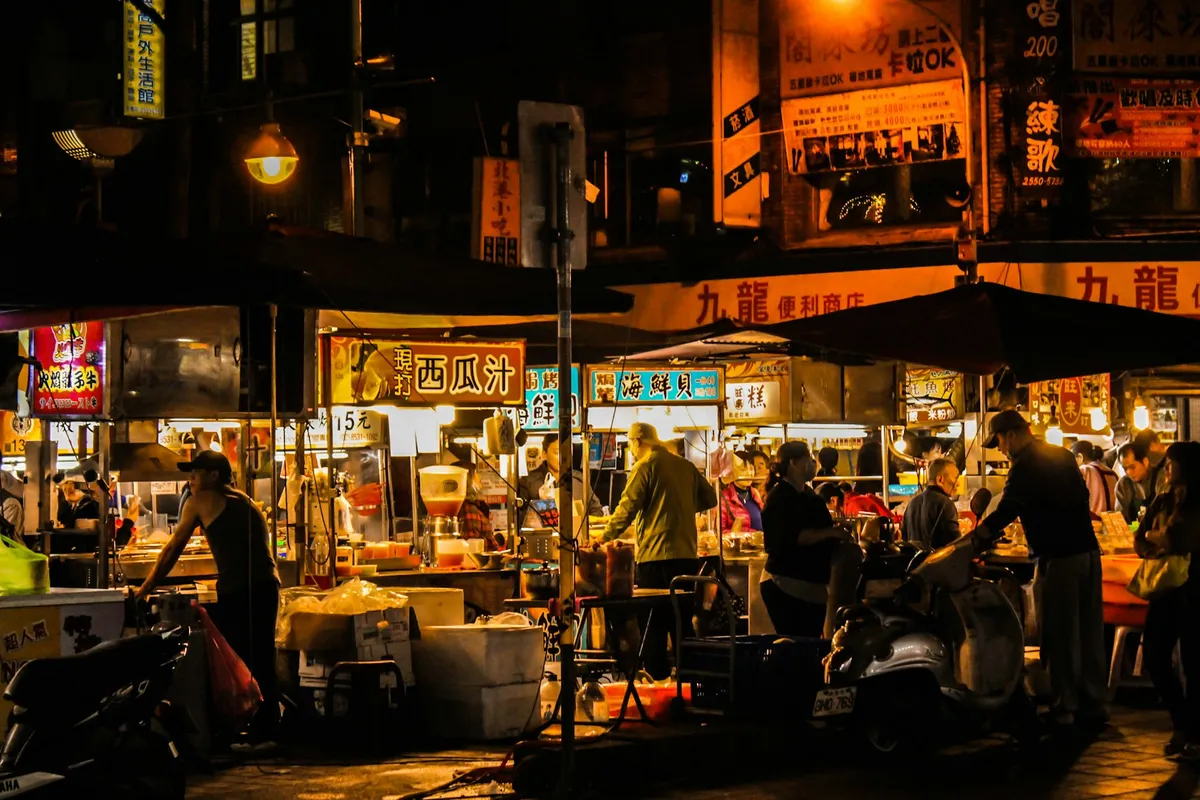
The first time you walk into a major Chinese night market, you will be overwhelmed. This is not a design flaw -- it is the intended experience. The noise hits first: vendors shouting orders, oil sizzling, charcoal popping, mahjong tiles clacking from a nearby tea house. Then the smoke: cumin and chili hitting hot charcoal, creating an aromatic cloud visible from blocks away. Then the visual assault: red lanterns, neon signs, steaming bamboo baskets, skewers spinning over open flames, faces lit by phone screens showing WeChat Pay QR codes. This is an organic, chaotic, centuries-old food ecosystem. Your job as a first-timer is to move through it with a strategy. This guide provides that strategy, based on hundreds of visits across six cities by our team.
The Pre-Market Strategy
What to Bring (and What to Leave)
- Bring: Your phone (for WeChat Pay or Alipay), RMB 200 in small bills (10 and 20 RMB notes) as backup, a packet of tissues (many stalls do not provide napkins), hand sanitizer, and a fully charged phone battery. A small ziplock bag helps for leftover snacks.
- Do not bring: A large backpack (crowd maneuverability is essential), a DSLR with a large lens (you will be jostled), or a wallet full of foreign credit cards (you will not use them -- street stalls are cash-in-CNY or mobile payment only).
- Dress code: Comfortable closed-toe shoes (spilled oil and dropped skewers). Clothing you do not mind smelling like cumin all night. Layers -- indoor hot pot stalls are steamy; outdoor winter markets are freezing.
Know Your Payment Method
WeChat Pay and Alipay are universal at Chinese night markets. If you are a foreign visitor, set up Alipay Tour Pass or link an international card to WeChat Pay before leaving your hotel. Doing this standing in front of a stall while a line forms behind you is a uniquely stressful experience. The backup RMB 200 in small bills covers the ~5% of stalls that are cash-only -- usually the oldest vendors in the deepest alleys.
The Two-Lap Method: Walk First, Eat Second
Lap 1 (10-15 minutes): Survey. Do not buy anything. Walk the full market at a moderate pace. Note: which stalls have the longest local queues, which use charcoal vs. gas (charcoal = better), where ingredients look fresh (turnover indicator), and where families with children are eating (safety and taste indicator -- Chinese parents are extremely selective about street food for their kids).
Lap 2: Execute. Return to 3-4 stalls you identified. Order: start light (a skewer or small noodle bowl), then heavier, then cold/sweet as a palate reset. Repeat the cycle. Do not commit to a full meal at a single stall -- night markets are designed for grazing across multiple vendors.
The Queue Rule: A stall with no line at 7:30 PM on Saturday night is sending a clear message. A stall with a 20-person queue at the same time is worth standing in. Editor's rule: if you see three or more people over 60 in a queue, join it immediately. Retirees in China know food and they have time to be picky.
The Top Night Markets, Ranked and Explained
1. Xi'an Muslim Quarter (hui min jie) -- Best Overall
Unmatched atmosphere, the highest concentration of excellent stalls, a food culture distinct from anywhere else. Must eat: lamb skewers from charcoal grills (look for wire skewers, not bamboo), roujiamo from Fan Ji on Zhubashi Street, liangpi from Wei Jia Liangpi on Dapiyuan Street, sour plum drink (suan mei tang). Budget: RMB 60-100. Timing: arrive 5:45 PM, walk full length first, eat 6-8 PM. By 8 PM the crowd is shoulder-to-shoulder.
2. Chengdu Jianshe Road (jian she lu) -- Best for Spice
The most authentic local experience of any major night market. Minimal English, maximum flavor. Must eat: mala tang from any stall with a rotating cast of locals at the counter, chuan chuan (count your sticks at the end -- RMB 0.5-1 each), grilled skewers from the uncle who has been at the same spot since 2015, bingfen as a fire extinguisher. Budget: RMB 40-70.
3. Chongqing Jiefangbei / Bayi Road -- Best for Extreme Heat
The spiciest night market in China. Xiaomian stalls serve bowls dressed in chili oil, Sichuan pepper, sesame paste, and vinegar for RMB 8-12. The chuan chuan here is spicier than Chengdu. Bring tissues -- your nose will run.
4. Beijing Guijie (Gui Jie) -- Best Late-Night
Open until 4 AM. More restaurant-heavy (sit-down crawfish spots rather than street carts) but unmistakable night-market energy. The spicy crawfish (ma la xiao long xia) is the signature -- messy, spicy, eaten with plastic gloves alongside cold Tsingtao beer. Crawfish best between May and August.
5. Shanghai Yunnan Road (Yun Nan Nan Lu) -- Best for Snack History
More collection of century-old institutions than chaotic night market. Yang Fry Dumplings, Jia Jia Tang Bao, and A Cheng Scallion Pancakes are all here. More restrained, Shanghai style, but food quality is extraordinarily consistent.
Night Market Etiquette: The Unwritten Rules
- Slurping is expected. Noodle soup is loud food. Silence while eating noodles is considered slightly odd.
- Sharing is the default. Order different things and share everything. A table of four each ordering their own dish misses the point.
- Do not haggle. Street food prices are fixed and low. Haggling over RMB 10 noodles is not culturally appropriate and will confuse the vendor.
- Return your tray and skewers. Some stalls have designated return areas. Watch what locals do and follow suit.
- Seat sharing is normal. If a table has empty seats and the market is crowded, it is acceptable to ask: Zhe li you ren ma? (Is someone sitting here?) while gesturing at the seat.
- Do not photograph people without permission. Food yes. Market atmosphere yes. Individual people, especially older vendors -- ask first or do not do it.
FAQ: Night Market Survival
Are night markets safe for foreigners?
Yes. The point-and-nod method works at 90% of stalls. Vendors at major markets in all six cities are accustomed to foreign customers. See our ordering guide for specific techniques.
How do I know if a stall is hygienic?
High customer turnover is the single best indicator. Food cooked in front of you on a hot grill or in a busy wok is almost certainly safe -- heat kills pathogens and ingredients are fresh because they are used constantly. Pre-cooked food sitting at room temperature for extended periods carries more risk. Also: if Chinese parents are feeding the food to their children at the stall, it is safe. Chinese parents are extremely risk-averse about food safety for their kids.
What if I have dietary restrictions?
Gluten-free is hardest (most snacks are wheat-based). Vegetarian is easier, especially in Buddhist-influenced cities. Halal is straightforward in Xi'an (the entire Muslim Quarter). For specific needs, filter our snack directory by dietary requirement.
ChineseSnacks Editorial Team
ChineseSnacks is an independent editorial team publishing practical guides to eating street food in China. Every guide is built from verifiable sources: price ranges checked against current market data and online retail channels, snack recommendations cross-referenced with local community feedback (including Reddit's r/beijing and r/chinesefood), brand and product details sourced from official channels, and locations verified against maps and traveler reports. Content is reviewed quarterly, and reported errors are corrected within days.